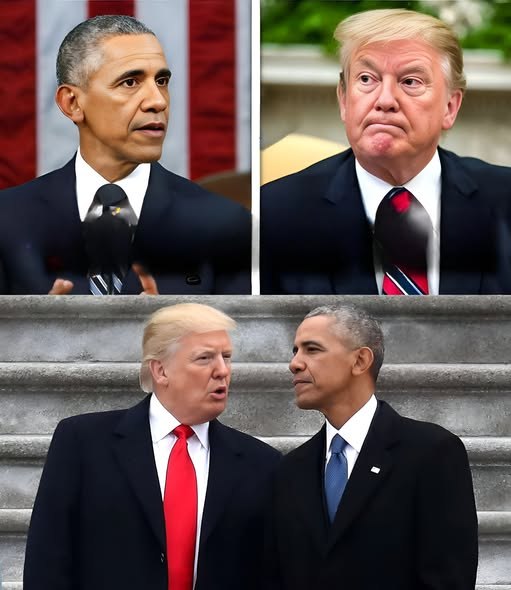
The digital age has turned political discourse into a high-stakes arena where a single sentence can ignite a global firestorm in seconds. A recent televised appearance featuring Donald Trump has become the latest case study in this phenomenon, as he directed a series of sharp, unscripted remarks toward Barack Obama. While policy debates are the standard currency of Washington, the sheer intensity and delivery of this specific exchange transcended the usual news cycle, morphing into a viral cultural moment that reveals the raw power—and the inherent dangers—of live broadcasting in 2026.
When remarks are delivered in real time, the traditional safety nets of political communication vanish. There are no teleprompters to soften the blow and no editors to provide nuance. This lack of a “buffer zone” creates an atmosphere of perceived authenticity that audiences crave, yet it simultaneously strips away the decorum that historically anchored public office. The impact of these words was amplified by the immediate, visceral nature of the medium. Because the language was direct and the delivery was instantaneous, viewers were forced to process the conflict in a state of high emotion, often reacting before they had the chance to reflect on the underlying context.
The friction between these two figures is not merely personal; it is a clash of two diametrically opposed eras of American leadership. Barack Obama’s tenure was defined by a measured, academic approach to communication, often leaning on deliberate oratory and a focus on systemic reform. In stark contrast, Donald Trump’s rise was fueled by a disruptive, conversational style that favored “straight talk” over polished diplomacy. When these two philosophies collide on a live stage, the resulting explosion is never just about the specific words spoken. Instead, the audience views the conflict through the lens of their own political identity, turning a simple exchange into a proxy war for the soul of the country.
Social media serves as the ultimate oxygen for these flames. Within minutes of the broadcast ending, the most inflammatory clips were already circulating as “micro-content” on various platforms. This fragmentation of information is where the original intent of a speech often dies. A ten-second soundbite, stripped of the preceding five minutes of conversation, travels much faster than the full truth ever could. In this digital ecosystem, the reaction to the news becomes the news itself. The commentary from influencers, the memes, and the partisan headlines shape the public’s memory of the event far more effectively than the actual transcript.
Communication experts note that while this “unfiltered” approach creates a sense of transparency, it also deepens the existing fractures in society. Public figures are increasingly speaking to an environment where every syllable is a potential weapon. This shift has forced a massive change in how we perceive authority; visibility is now constant, and the speed of a narrative often matters more than its accuracy. We are living in an era where audiences don’t just consume the news—they participate in its creation and evolution.
The ultimate takeaway from this heated exchange is a sobering reminder of the weight of public speech. Directness can be a virtue, but in an era of instant global reach, it must be balanced with a sense of responsibility. As these moments continue to dominate our screens, the burden of clarity falls as much on the viewer as it does on the speaker. In a world where everything moves at the speed of light, the most radical act a person can take is to pause, look past the viral noise, and consider the weight of what was actually said.